
-
Introduction: The Uncharted $3 Trillion Frontier
-
What Exactly is Blue Economy Sustainable Development?
-
Why the World is Shifting Focus to Our Oceans
-
7 Incredible Ways to Profit from the Blue Economy
-
The Rise of Blue Bonds and Ocean-Based Finance
-
The Environmental Impact: Healing the “Blue Heart”
-
Major Challenges in Maritime Innovation
-
Top 5 Countries Leading the Blue Revolution
-
How Individual Investors Can Participate
-
The Future: Harnessing Wave and Tidal Energy
-
Common Misconceptions About Marine Exploitation
-
Conclusion: A Sustainable Voyage Ahead
1. Introduction: The Uncharted $3 Trillion Frontier
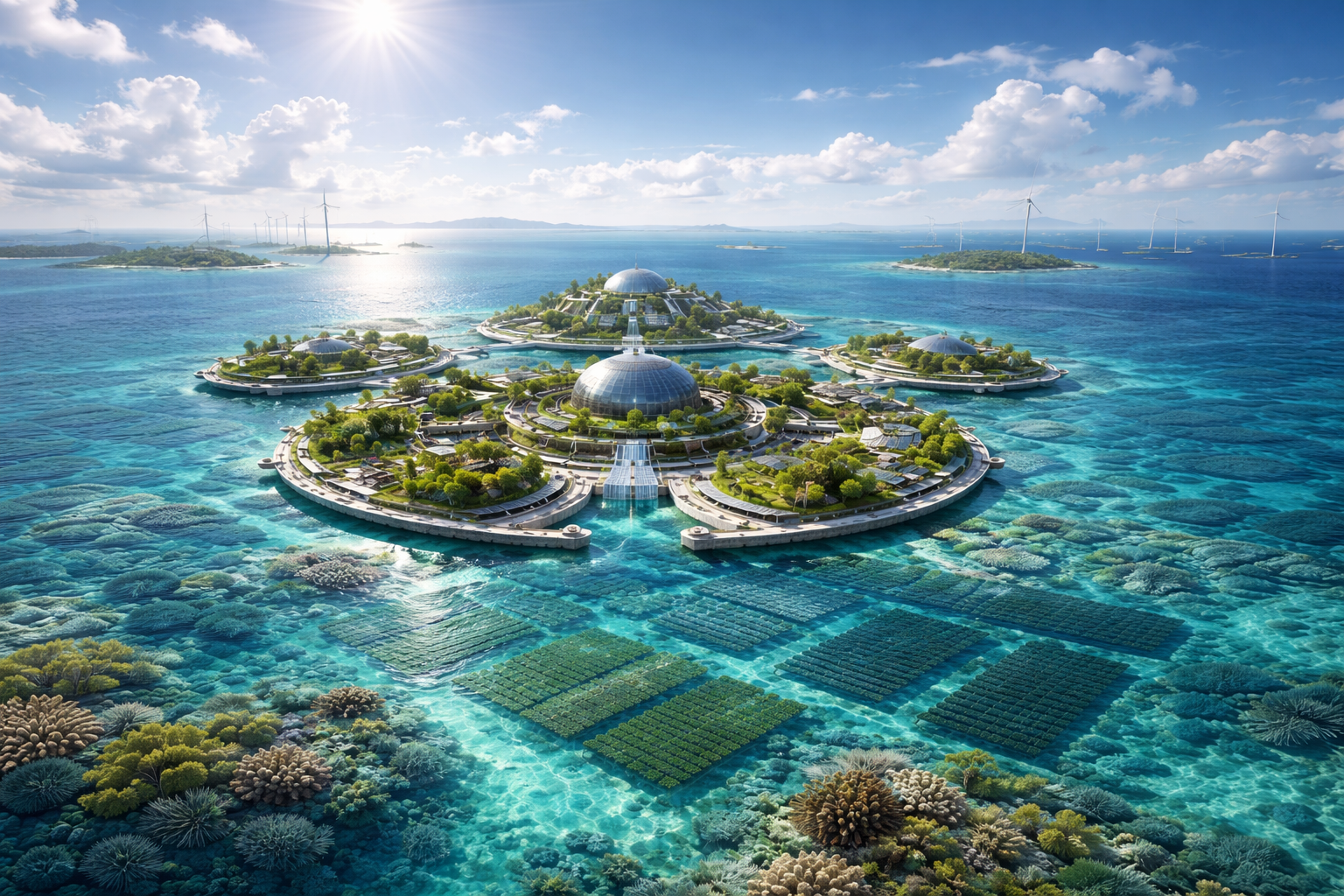
While investors have spent decades looking at land-based real estate and tech, the next massive economic shift is happening in the water. Blue Economy Sustainable Development is estimated by the OECD to be worth over $3 trillion by 2030. It is the final frontier of global trade, energy, and food security.
In this era of 10 Best Digital Income Streams 2026: Earn $500 Monthly Online, we are moving away from “extracting” from the ocean and toward “regenerating” it. This guide explores how this shift is creating incredible opportunities for wealth and planet restoration.
2. What Exactly is Blue Economy Sustainable Development?
Simply put, Blue Economy Sustainable Development is the “sustainable use of ocean resources for economic growth, improved livelihoods, and jobs while preserving the health of the ocean ecosystem.”
It is not just about fishing. It includes everything from renewable energy and green shipping to marine biotechnology and carbon sequestration. As per the World Bank Blue Economy Definition, it is a holistic approach to managing our most vast resource: the ocean.
3. Why the World is Shifting Focus to Our Oceans
With land resources becoming scarce and climate change accelerating, the ocean offers a “Blue Solution.” Oceans absorb 30% of human-produced CO2 and are home to 80% of all life on earth. Blue Economy Sustainable Development is now a top priority for the UN’s Sustainable Development Goals (SDG 14).
4. 7 Incredible Ways to Profit from the Blue Economy
-
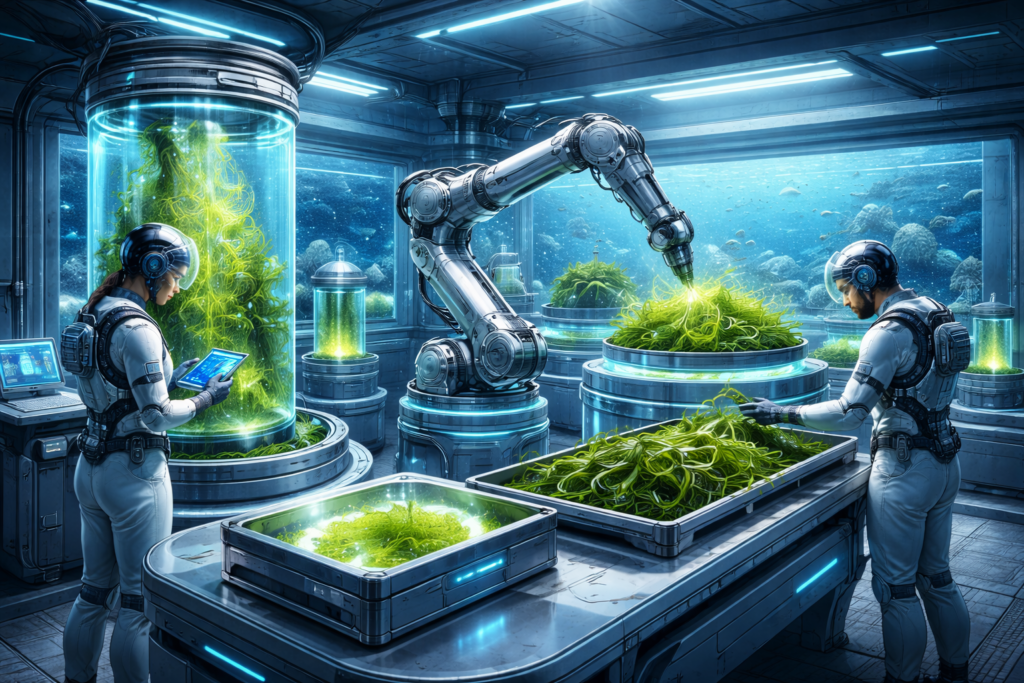
Regenerative Seaweed Farming: Seaweed grows 30x faster than land plants and requires no fresh water or fertilizer. It’s used in food, cosmetics, and bioplastics.
-
Offshore Wind and Tidal Energy: Harnessing the constant power of ocean winds and waves to provide clean, unlimited electricity to coastal cities.
-
Marine Biotechnology: Discovering new medicines and enzymes from deep-sea organisms that can treat diseases like cancer or Alzheimer’s.
-
Sustainable Mariculture: Moving away from traditional fish farming to closed-loop systems that don’t pollute the surrounding water.
-
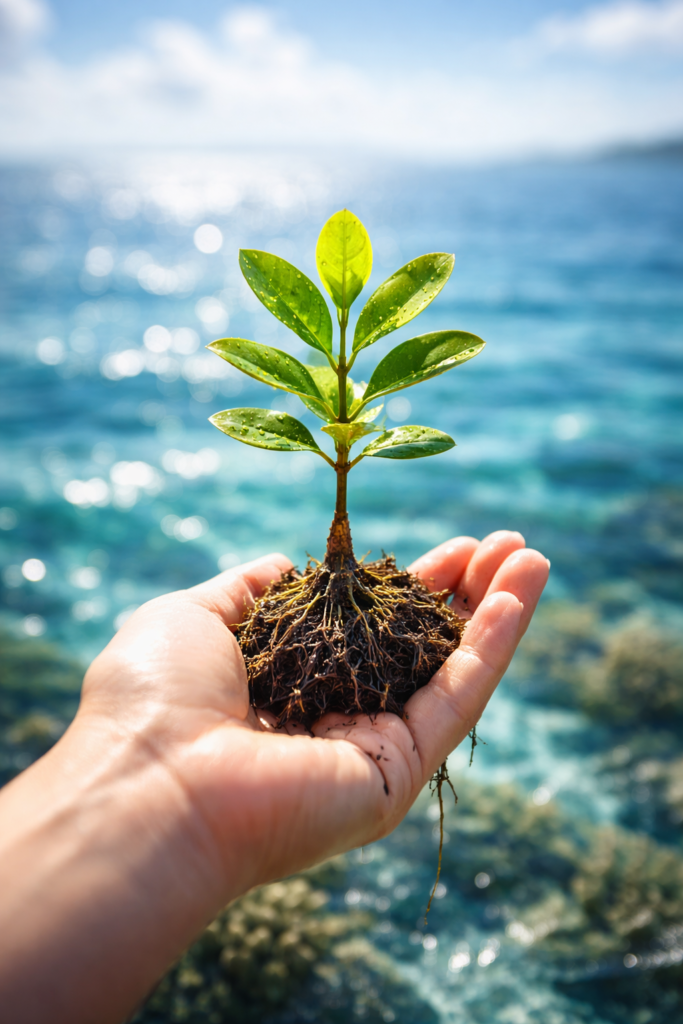
Blue Carbon Credits: Companies are now paying to restore mangroves and seagrasses, which store 4x more carbon than tropical forests.
-
Green Shipping Logistics: Investing in hydrogen-powered cargo ships and AI-optimized routes to reduce the carbon footprint of global trade.
-
Ocean Ecotourism: High-end, low-impact travel experiences that fund coral reef restoration and local coastal communities.
5. The Rise of Blue Bonds and Ocean-Based Finance
Just as “Green Bonds” took over the stock market, “Blue Bonds” are the next big thing in Blue Economy Sustainable Development. Countries like Seychelles and Belize have already launched successful blue bonds to refinance their debt in exchange for protecting their marine areas. This is an “incredible” way for institutional investors to see steady returns while doing good.
6. The Environmental Impact: Healing the “Blue Heart”
We cannot have a blue economy without a healthy ocean. Restoration of coral reefs and the elimination of “Ghost Gear” (lost fishing nets) are essential. Blue Economy Sustainable Development focuses on a circular model—where waste is eliminated and every byproduct is reused.
7. Major Challenges in Maritime Innovation
It’s not all smooth sailing. Developers face:
-
High Initial Costs: Building infrastructure in the middle of the ocean is expensive.
-
Harsh Environments: Saltwater corrosion and extreme weather can damage equipment.
-
Regulatory Hurdles: International waters often lack clear ownership or laws.
For more on navigating these risks, check our 10 Incredible Ways Neuralink Brain Chip Update Changes Lives
8. Top 5 Countries Leading the Blue Revolution
-
Norway: A leader in offshore wind and sustainable salmon farming.
-
China: Investing heavily in deep-sea mining technology and port automation.
-
Portugal: Hosting major UN ocean conferences and focusing on marine tech.
-
India: With its “Deep Ocean Mission,” India is exploring minerals and energy in the Indian Ocean.
-
Canada: Focused on protecting its vast Arctic and Atlantic coastlines through sustainable tourism.
UNESCO Ocean Decade Official Site
9. How Individual Investors Can Participate
You don’t need a submarine to invest in Blue Economy Sustainable Development. You can:
-
Invest in ETFs focused on water and marine tech.
-
Support startups working on plastic alternatives made from seaweed.
-
Buy stocks in companies leading the transition to green maritime shipping.
10. The Future: Harnessing Wave and Tidal Energy
The most “incredible” aspect of the future is the potential of wave energy. Unlike solar (only day) or wind (intermittent), waves are constant. New floating platforms are being tested that can power entire islands using only the motion of the tides.
11. Common Misconceptions About Marine Exploitation
Many people confuse “Blue Economy” with “Blue Growth” (which can be destructive). True Blue Economy Sustainable Development ensures that we leave the ocean better than we found it. It is about “Balance,” not just “extraction.”
12. Conclusion: A Sustainable Voyage Ahead
The ocean has always been a source of mystery, but now it is a source of hope. By embracing Blue Economy Sustainable Development, we can solve the world’s energy, food, and climate crises simultaneously.
The voyage has just begun. Are you ready to dive into the future of wealth?