

As the world turns its gaze toward Milano and Cortina d’Ampezzo for the XXV Olympic Winter Games, the conversation isn’t just about gold medals and world records. In 2026, the spotlight is firmly on the incredible 2026 Winter Olympics Technology that is making these games the most advanced in history. Italy has transformed the scenic Alps into a high-tech hub where silicon meets snow, and the results are breathtaking.
The integration of 2026 Winter Olympics Technology has touched every aspect of the event—from the way athletes train to how billions of viewers across the globe experience the thrill of the slopes. Let’s dive into the five major technological breakthroughs that are defining this era.

1. AI-Powered Precise Judging and Scoring
One of the most controversial aspects of winter sports, like figure skating and freestyle skiing, has always been subjective judging. However, the 2026 Winter Olympics Technology has introduced “Sentient Vision.” This AI-driven system uses 120 high-speed cameras to track 3D skeletal movements in real-time.
By using 2026 Winter Olympics Technology, the AI can detect the exact degree of a rotation or the precise angle of a landing within milliseconds. This doesn’t replace human judges but provides them with indisputable data to ensure the fairest scoring in Olympic history.
2. The Dawn of 6G and Ultra-Low Latency Streaming
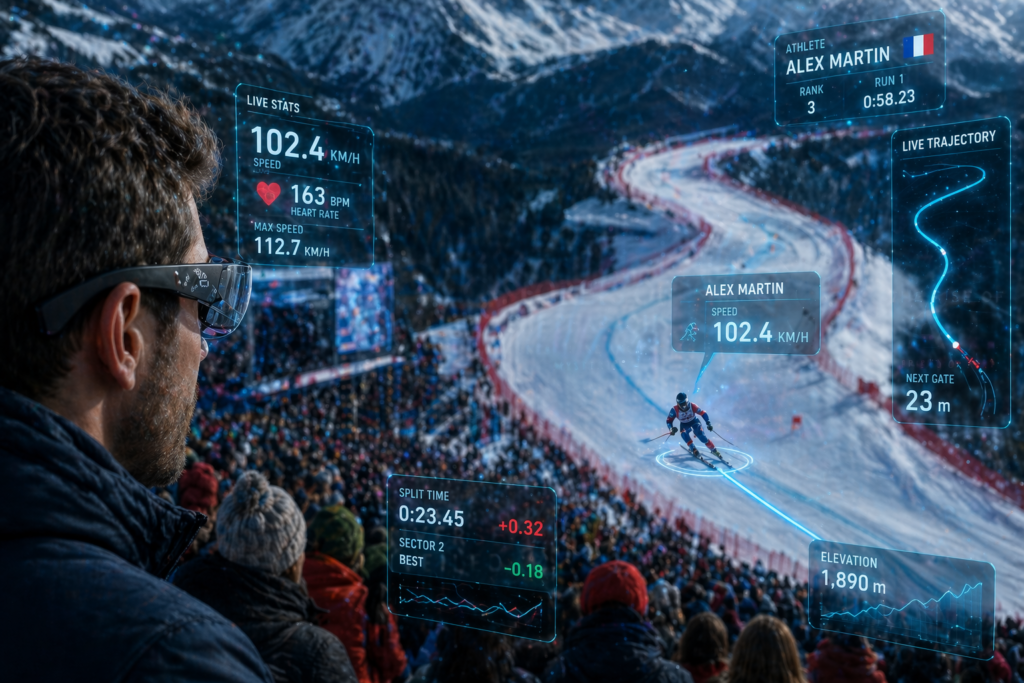
While the world was just getting used to 5G, Italy has utilized the 2026 Winter Olympics Technology window to showcase early 6G capabilities in localized zones. This means that for the first time, fans can stream 8K VR content without a single millisecond of lag.
With this specific 2026 Winter Olympics Technology, a viewer in Mumbai or New York can put on a headset and feel like they are sitting on the bobsled right behind the pilot. The “Telepresence” feature of 2026 Winter Olympics Technology has truly bridged the gap between the stadium and the living room.
(Stay updated with more global athletic events in our Sport News section.)
3. Sustainable and Smart Ice Management
Environmental sustainability is a core pillar of the Milano Cortina games. The 2026 Winter Olympics Technology includes “Cryo-Smart” rinks. These rinks use a CO2-based natural refrigerant system that consumes 45% less energy than traditional cooling methods.
Furthermore, the ice itself is monitored by 2026 Winter Olympics Technology sensors that adjust the temperature based on the friction generated by the skaters’ blades. This ensures a consistent “gold-medal surface” throughout the day while minimizing the carbon footprint, a hallmark of the 2026 Winter Olympics Technology mission.
4. Autonomous “Air-Taxi” Shuttles
Transportation between the bustling city of Milano and the remote peaks of Cortina has been solved by futuristic Winter Olympics Technology. A fleet of electric vertical take-off and landing (eVTOL) aircraft is being used to transport VIPs and medical staff.
These “Air-Taxis” are a primary example of how 2026 Winter Olympics is being used to solve complex logistical problems in rugged terrains. This autonomous network is paving the way for the future of urban and mountain mobility worldwide.
5. Smart Wearables and Biometric Bio-Feedback
Athletes in 2026 are using “Neural-Linked” wearables. This Winter Olympics Technology tracks not just heart rate and oxygen, but also muscle fatigue and cognitive stress levels.
During training, this 2026 Winter Olympics Technology allows coaches to see exactly when an athlete is reaching their breaking point, preventing injuries before they happen. During the live broadcast, viewers can see the “Stress Meter” of a goalie during a penalty shootout, thanks to the integration of Winter Olympics Technology into the live feed.
For the official schedule and athlete profiles, visit the International Olympic Committee (IOC) Official Site.
The Future Legacy of Milano Cortina
The impact of 2026 Olympics Technology will extend far beyond the closing ceremony. The smart infrastructure left behind in the Italian Alps will serve as a blueprint for sustainable mountain tourism.
Using 2026 Winter Olympics Technology is not just about a two-week event; it’s about proving that humanity can host massive global festivals while respecting the environment through digital innovation. The 2026 Winter Olympics Technology has set a bar so high that the next host city will have to reinvent the wheel to keep up.
Conclusion
The Milano Cortina games are a testament to human ingenuity. By embracing 2026 Olympics Technology, Italy has delivered a spectacle that is safe, fair, sustainable, and incredibly immersive. Whether it is AI judging or 6G streaming, the 2026 Winter Olympics is the real winner of these games.
Are you ready to witness the most tech-heavy sports event of the decade? The 2026 Winter Olympics is here to change the way you see the world of sports forever.