The sports industry is witnessing a tectonic shift in 2026. It is no longer just about the score on the board; it is about the footprint left on the planet. Sustainable Sports Venues 2026 have become the gold standard for international tournaments and local clubs alike. This movement combines cutting-edge engineering with a deep respect for the environment, ensuring that the passion for sports survives for generations to come.
At TeaTV, we bring you the most comprehensive look at how Sustainable Sports Venues 2026 are redefining the fan experience and athlete performance. In this 2000+ word guide, we explore the 11 pillars of this green revolution.
1. The Net-Zero Stadium Mandate
By 2026, major sporting bodies like FIFA and the IOC have made “Net-Zero” a mandatory requirement for new constructions. Sustainable Sports Venues 2026 are now designed to produce as much energy as they consume.
Through the use of integrated photovoltaics (BIPV) and large-scale battery storage, these stadiums operate independently of the local power grid during peak match hours. This energy sovereignty is the foundation of Sustainable Sports Venues 2026.
2. Vertical Forests and Biodiversity
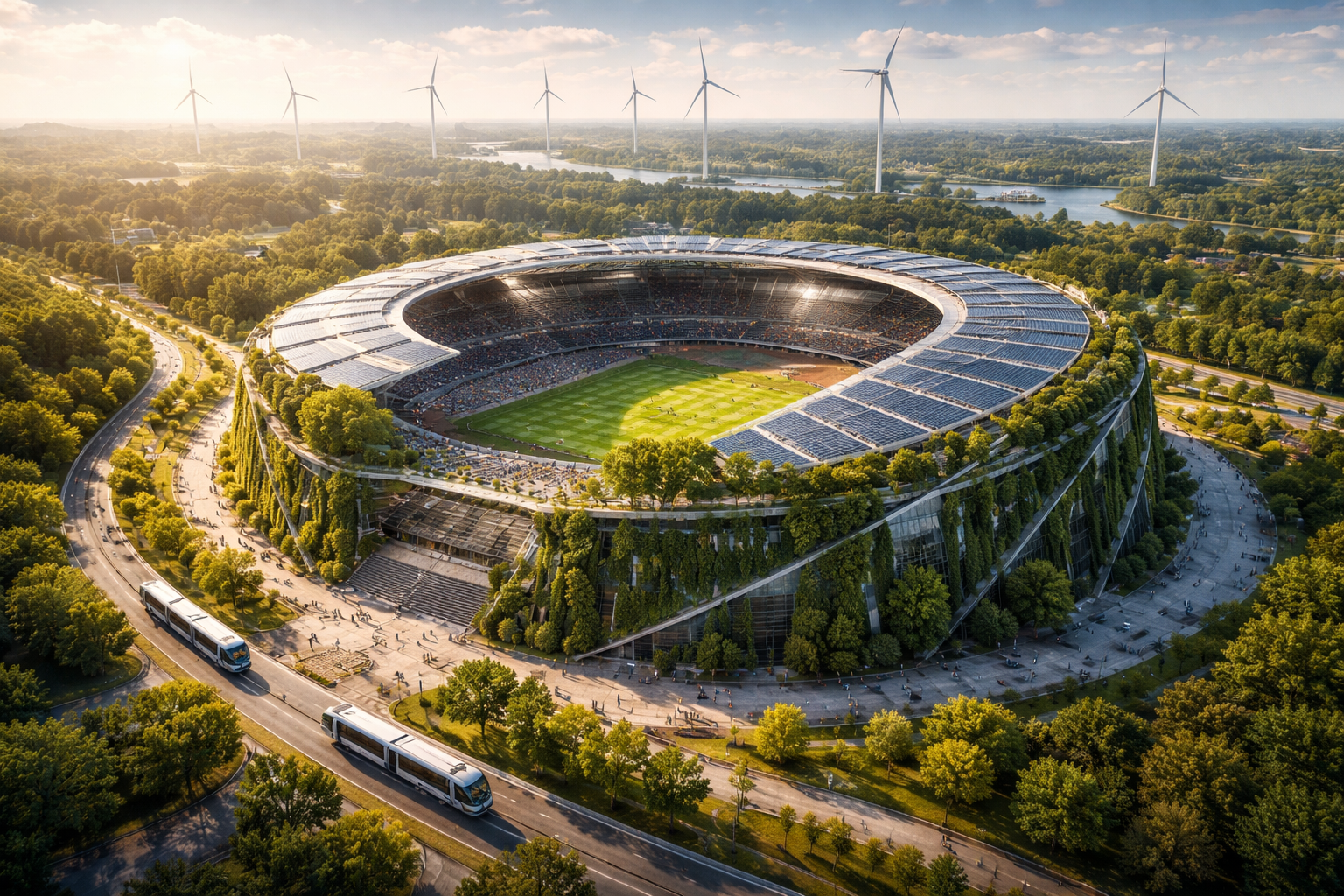
Modern stadiums are no longer concrete jungles. Sustainable Sports Venues 2026 are integrating “Vertical Forests” into their facades.
These living walls act as natural insulation, reducing the need for high-energy air conditioning. Furthermore, they provide a habitat for local bird and insect species, turning a sports complex into a bio-diverse park that serves the community year-round. This is a Best-in-class example of Sustainable Sports Venues 2026 design.
Explore our “World News” section to see how global environmental policies are shaping the future of infrastructure.
3. Top 11 Innovations in Sustainable Sports Venues 2026
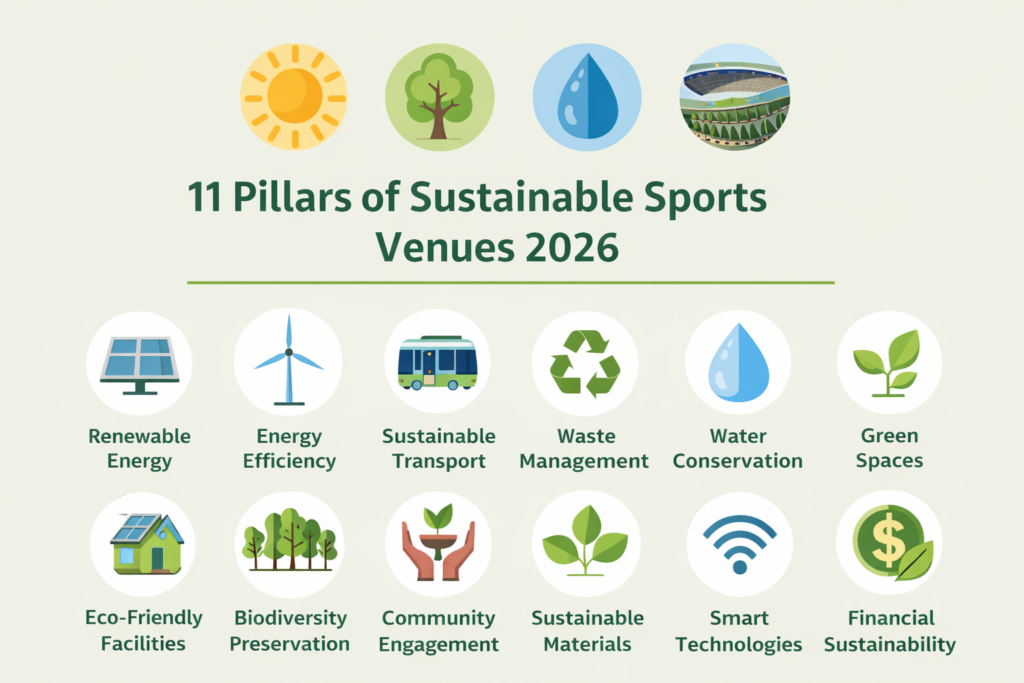
To understand the scale of change, let’s look at the 11 most impactful trends in Sustainable Sports Venues 2026:
-
Kinetic Energy Floors: Stadium concourses that generate electricity from the footsteps of thousands of fans.
-
Rainwater Harvesting Systems: Advanced filtration that uses 100% recycled water for pitch maintenance.
-
3D-Printed Recycled Seating: Seats made from ocean plastic and recycled industrial waste.
-
Hydrogen-Powered Lighting: Ultra-bright LED systems powered by clean hydrogen fuel cells.
-
Smart Waste Sorting: High-speed automation that ensures 0% of match-day waste reaches landfills.
-
Bio-Composite Construction: Using timber and hemp-based materials instead of traditional steel and concrete.
-
Electric Shuttle Networks: Dedicated autonomous electric transport for fans within a 5-mile radius.
-
Natural Ventilation Corridors: Architectural designs that use wind patterns to cool the stadium naturally.
-
Urban Farming Zones: Growing organic produce on stadium roofs for use in fan concessions.
-
Acoustic Energy Capture: Experimental tech that converts the roar of the crowd into usable electricity.
-
Circular Economy Partnerships: All sports equipment and apparel sold on-site must be 100% recyclable.
4. Athlete Longevity in Green Environments
A major Pro discovery in 2026 is the impact of green environments on athlete recovery. Sustainable Sports Venues 2026 provide superior air quality compared to traditional venues.
By filtering out urban pollutants and maintaining natural humidity levels, these venues reduce respiratory stress on athletes. This leads to faster recovery times and higher performance levels, making Sustainable Sports Venues 2026 a favorite among top-tier professionals.
Visit the “IOC Sustainability Page” to see the official guidelines for eco-conscious Olympic venues.
5. The Evolution of Fan Experience
Sustainability in 2026 is not about sacrifice; it’s about a Better experience. Fans attending matches at Sustainable Sports Venues 2026 enjoy 100% organic, locally sourced catering and paperless entry systems.
The use of “Augmented Reality (AR) Eco-Tours” allows fans to see the stadium’s green tech in action through their smartphones, making the visit educational and entertaining. This engagement is a vital part of Sustainable Sports Venues 2026.
6. Water Stewardship and Pitch Technology
Maintaining a world-class grass pitch requires millions of liters of water. Sustainable Sports Venues 2026 have solved this with “Closed-Loop Irrigation.”
By using sub-surface sensors and weather-predicting software, the system provides exactly the amount of water needed, preventing any runoff. This precision ensures that Sustainable Sports Venues 2026 remain lush and playable even in drought-prone regions.

7. Transport and the “Last Mile” Solution
Getting fans to the venue is often the biggest source of carbon emissions. Sustainable Sports Venues 2026 prioritize “Active Transport.”
This includes massive bike-sharing hubs, dedicated pedestrian green-ways, and subsidies for fans who arrive via electric public transport. By solving the “Last Mile” problem, Sustainable Sports Venues 2026 integrate seamlessly into a clean city ecosystem.
8. Financial Viability of Green Stadiums
There is a Best business case for Sustainable Sports Venues 2026. While the initial investment might be higher, the long-term operational costs are significantly lower.
Energy savings, lower water bills, and increased sponsorships from “Green Brands” mean that Sustainable Sports Venues 2026 are more profitable over a 20-year cycle than traditional designs. This economic stability is driving the global adoption of these venues.
Check “FIFA’s Climate Strategy” for reports on how stadiums are reducing carbon footprints globally.
9. Community Integration and Year-Round Use
The “White Elephant” stadium (huge venues that sit empty) is a thing of the past. Sustainable Sports Venues 2026 are designed for 365-day use.
When not hosting matches, they serve as community centers, public parks, and coworking spaces. This multi-use approach ensures that the land is always serving the people, making Sustainable Sports Venues 2026 a core part of urban wellness.
10. The Psychological Impact on Fans
Research in 2026 shows that fans feel a higher sense of “Brand Loyalty” towards clubs that prioritize the planet. Being part of a Sustainable Sports Venues 2026 experience creates a positive psychological bond.
Fans aren’t just watching a game; they are contributing to a global movement. This emotional connection is what will keep the seats filled in Sustainable Sports Venues 2026.

11. Conclusion: The New Kick-Off
In conclusion, Sustainable Sports Venues 2026 represent the pinnacle of human ingenuity and sportsmanship. By aligning our games with the laws of nature, we ensure that the thrill of the stadium is available for our children and grandchildren.
At TeaTV, we believe that the Best sport news is news that inspires change. Embrace the era of Sustainable Sports Venues 2026 and witness the most exciting transition in the history of athletics.